If you bought a new build, your builder warranty expires 12 months in. We do the walk at month 11 — and recover thousands in repairs every time.
- ▸Most builder warranties expire 12 months after close — the inspection should happen at month 11
- ▸We routinely document 15–30+ builder defects on warranty walks
- ▸Builder repair coverage is broad if claimed in writing before warranty expiration
- ▸Irvine, Cadence Park, Beacon Park, and Solis Park are common assignments for our team
Every new construction home in California comes with a builder warranty. The implied warranty of habitability runs for one year on workmanship — and after that, the burden of proof shifts firmly to you. Schedule a professional inspection at month 11, document every defect in writing to the builder, and you will recover thousands of dollars in repairs that would otherwise come out of your pocket. Here's how the inspection works.
Why month 11, not month 12
The warranty is yours for 12 months. The builder needs time to schedule, dispatch, and complete repairs. If you inspect at month 12 and submit your punch list on day 365, you'll be arguing with the builder's warranty department about whether the claim is timely. Submit at month 11 with photos and inspector documentation, and the conversation is dramatically smoother.
What we find
On a typical Trident 11-month warranty walk, we document 15–30+ builder defects. They fall into predictable categories:
Structural and framing settlement
- Drywall cracks above doors and windows (most are normal settlement; we identify which warrant builder repair)
- Door reveal gaps and binding from frame movement
- Floor squeaks from subfloor adhesion failure
- Visible nail pops and tape ridges
Roof and exterior
- Missing or damaged shingles, flashing gaps, missing kickout flashing
- Caulk separation at siding, trim, and penetrations
- Window leaks or improper flashing
- Gutter pitch errors
HVAC and plumbing
- Undersized HVAC zones (common in dense Stonegate and Cadence Park condos)
- Air balancing problems between bedrooms and main areas
- Slow drains from improper venting
- Loose toilet connections and water hammer in supply
Electrical
- GFCI / AFCI outlets not properly protected
- Wiring junctions in attic that don't meet code
- Improper grounding at sub-panels
- Loose outlet boxes
Attic and roof access
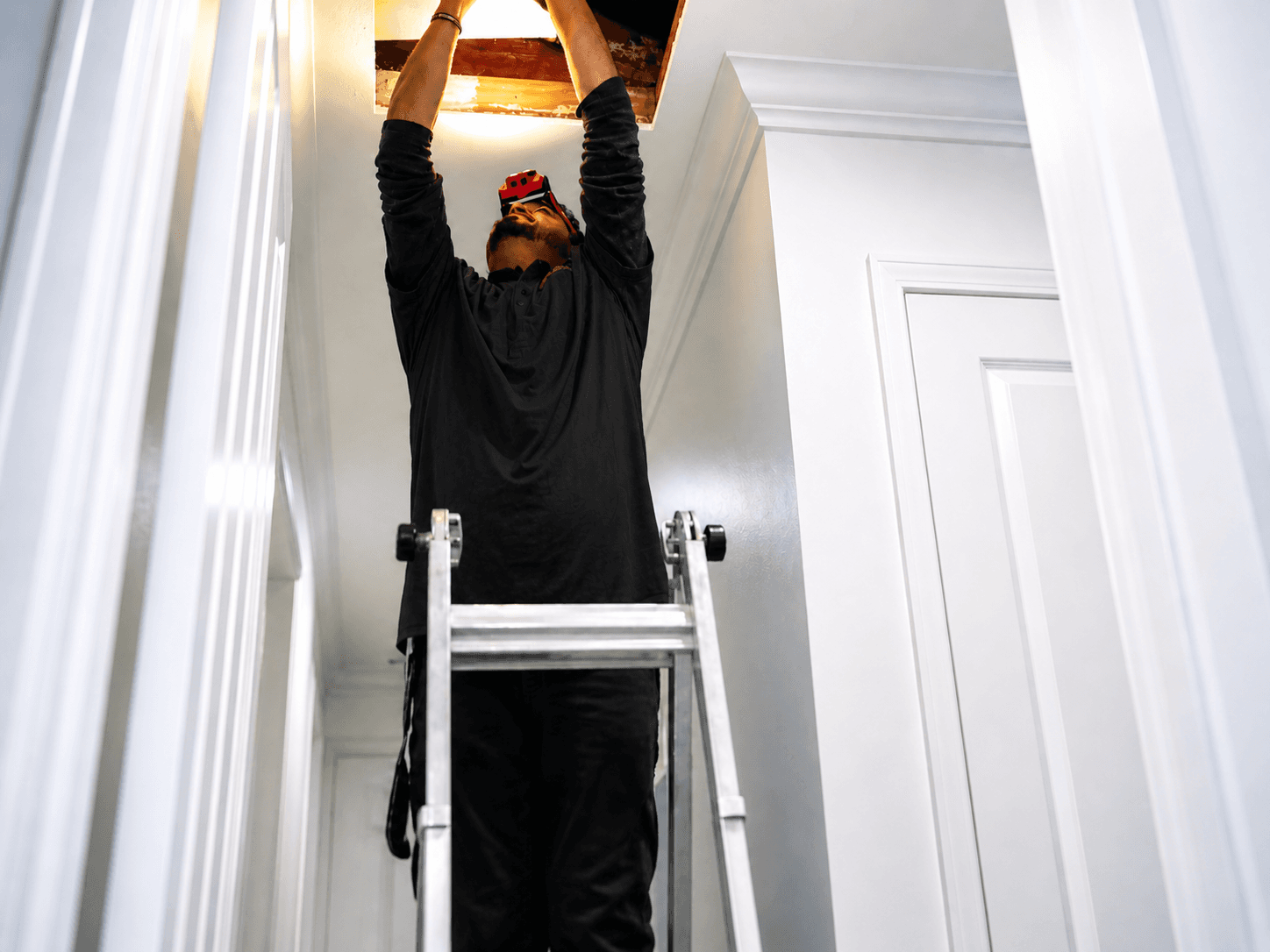
The attic is where we find the most consequential builder defects. Missing or stripped insulation in zones, gaps in vapor barriers, electrical splices without junction boxes, plumbing penetrations without proper sealing. None of these are visible from the living space, but every one of them affects energy performance, durability, and (in some cases) building code compliance.
Submitting to the builder
Take your inspection report — typically 40–80 pages with photo documentation — and submit it as a single warranty claim to your builder's warranty department. Don't pick and choose; submit everything. The builder's team will sort items into their internal categories (warranty-covered vs. "normal settlement," usually). Be prepared for some negotiation, but the photo evidence makes most items hard to refuse.
Email is the right channel. Phone calls don't create a record. Send the report as an email attachment with a brief cover note: "Please find attached our 11-month warranty walk report. We are requesting repair of all flagged items under the express and implied warranty."
What's covered (and what isn't)
Builder warranties typically cover workmanship and materials for one year. After year one, structural-element warranties continue for up to 10 years (California Civil Code §896), but the bar for those claims is much higher — you have to demonstrate actual damage or significant defect, not just a punch-list item.
Cosmetic items like minor drywall cracks, paint touch-up needs, and minor caulking are typically considered routine maintenance after year one. So getting them documented and repaired in the warranty window is the difference between free repairs and DIY weekends.
Common Irvine and Great Park scenarios
We do a lot of 11-month warranty walks in Irvine — Cadence Park, Beacon Park, Solis Park, Portola Springs, Stonegate. The defect patterns are remarkably consistent by builder. Lennar's electrical sub-panel layouts tend to show grounding issues. Brookfield's HVAC zoning is often undersized for upper bedrooms. William Lyon's window flashing has shown installation issues in certain 2020–2023 tracts. Knowing the builder-specific patterns lets us be specific about what to ask for.
How much you can expect to recover
On a typical warranty walk, we document repairs that would cost $4,000–$20,000+ if done out-of-pocket post-warranty. The inspection itself runs around $425 for homes under 2,500 sq ft. The ROI is rarely tight.
Scheduling the walk
Look at your closing date and back up to month 11. Schedule the inspection. Plan for a 2–4 hour walkthrough. Bring questions, especially about the items the builder pushed off during the original final walk. After the walk, expect the report within 24 hours.
Read more about our standard home inspection process, and for new construction specifically in Irvine, see our Irvine inspection page. For warranty walks in Anaheim and other OC cities, the process is identical.