A 30-minute sewer scope can reveal $20,000 problems before close. Here's what we look for, why it matters specifically in OC, and when it's a non-negotiable.
- ▸OC sewer line repair costs typically range $4,000–$25,000+
- ▸Standard home inspections cannot see buried sewer laterals
- ▸Pre-1990 homes should always be scoped
- ▸Orangeburg pipe is a near-automatic full replacement
If you're buying anything pre-1990 in Orange County, a sewer scope is not optional. Here's why.
What a sewer scope actually is
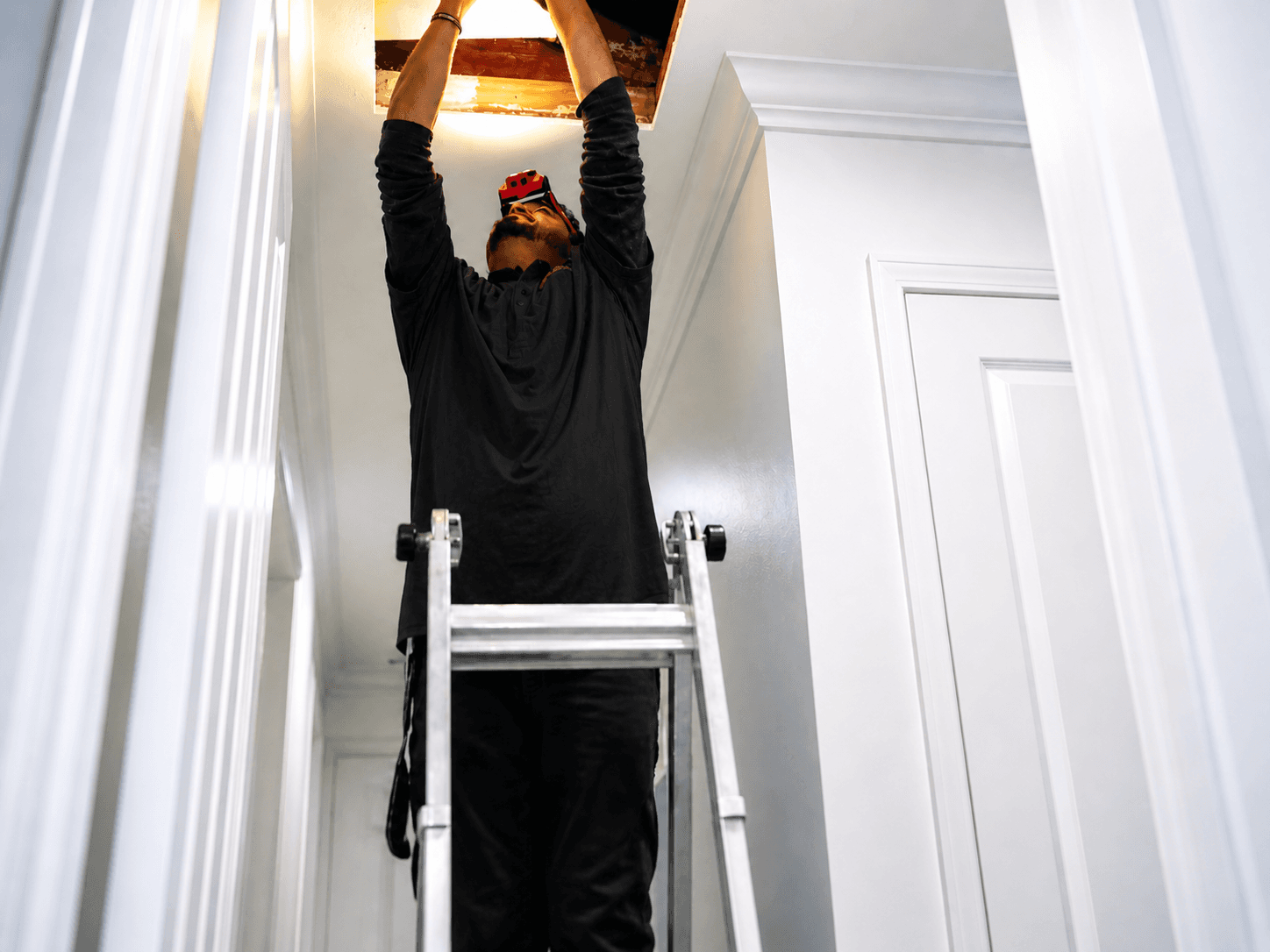
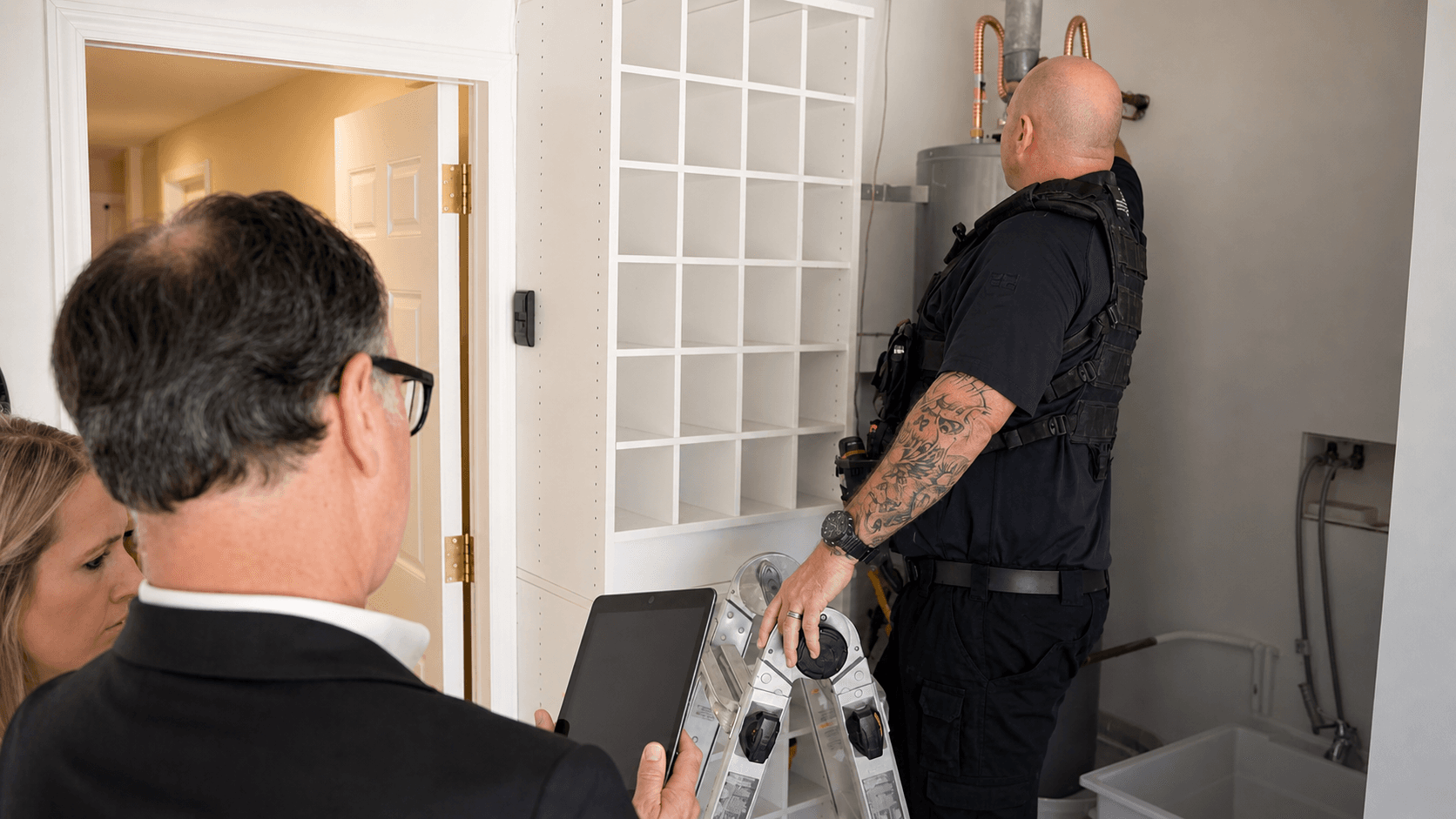
A sewer scope is a video inspection of the main sewer line — the buried pipe that carries waste from your home to the city tap. We push a flexible high-resolution camera through the line from the home's cleanout (or a roof vent or pulled toilet if no cleanout exists), all the way to the public sewer connection at the street, and we document the entire run on video.
The whole thing takes 20–45 minutes on-site. Reports are typically delivered within 24 hours of inspection.
Why this matters specifically in OC
Most Orange County homes were built between 1950 and 1985 — a period when sewer laterals were predominantly clay or cast iron, both of which fail in predictable ways at this age. Roots intrude through pipe joints, sections crack and break, the line settles into low spots called bellies, and pipe sections offset where the soil moves.
We also occasionally find Orangeburg pipe — a tar-and-paper pipe used in the 1940s and 1950s as a cheap alternative to clay. Orangeburg fails predictably; if we find it, it almost always needs full replacement.
Why standard home inspections miss it
Standard home inspections are visual and non-invasive. The sewer line is buried in the ground. There is no way to see it without specialized equipment. A standard home inspector can confirm that drains are running, but cannot tell you whether the line is intact, partially blocked, or about to fail.
Sewer line repair in Orange County typically costs $4,000–$25,000+ depending on length, depth, and access. Trenchless lining is sometimes possible at the lower end; full excavation under hardscape or driveways pushes toward the upper end.
What we find
On any given OC sewer scope, we typically find one or more of:
- Root intrusion — fine roots through pipe joints, ranging from minor (annual hydro-jet recommended) to severe (root mass blocking 80% of pipe)
- Cracks and breaks — radial or longitudinal cracks in clay pipe, often accompanied by soil intrusion
- Bellies — low spots where the pipe has settled, causing waste to pool instead of draining freely
- Offsets — where pipe sections have shifted apart, often associated with soil movement or root damage
- Material concerns — Orangeburg, deteriorating cast iron, or undersized lines
- Active blockages — debris, paper, or scale partially obstructing flow
When scoping is non-negotiable
Always scope:
- Homes built before 1990 — clay and cast-iron laterals at end of useful life
- Homes with mature trees within 15 feet of the sewer run
- Homes with a history of sewer backups
- Homes where landscaping has been substantially modified recently
- Any home you'd hate to buy if you knew it had a $20,000 sewer problem
For homes built after 2000, scoping is optional but still useful — especially if there's been recent landscaping, an unknown previous owner's maintenance history, or any drain issues during the inspection.
What to do if we find something
Severity ratings on our reports tell you exactly how to think about findings. Minor root intrusion is usually a maintenance item — annual hydro-jetting solves it. Significant breaks or bellies typically warrant negotiation: either ask the seller to repair, request a credit, or factor the repair cost into your decision.
We coordinate with licensed plumbers for repair quotes when needed. We don't do the repair ourselves — that separation keeps our findings honest.