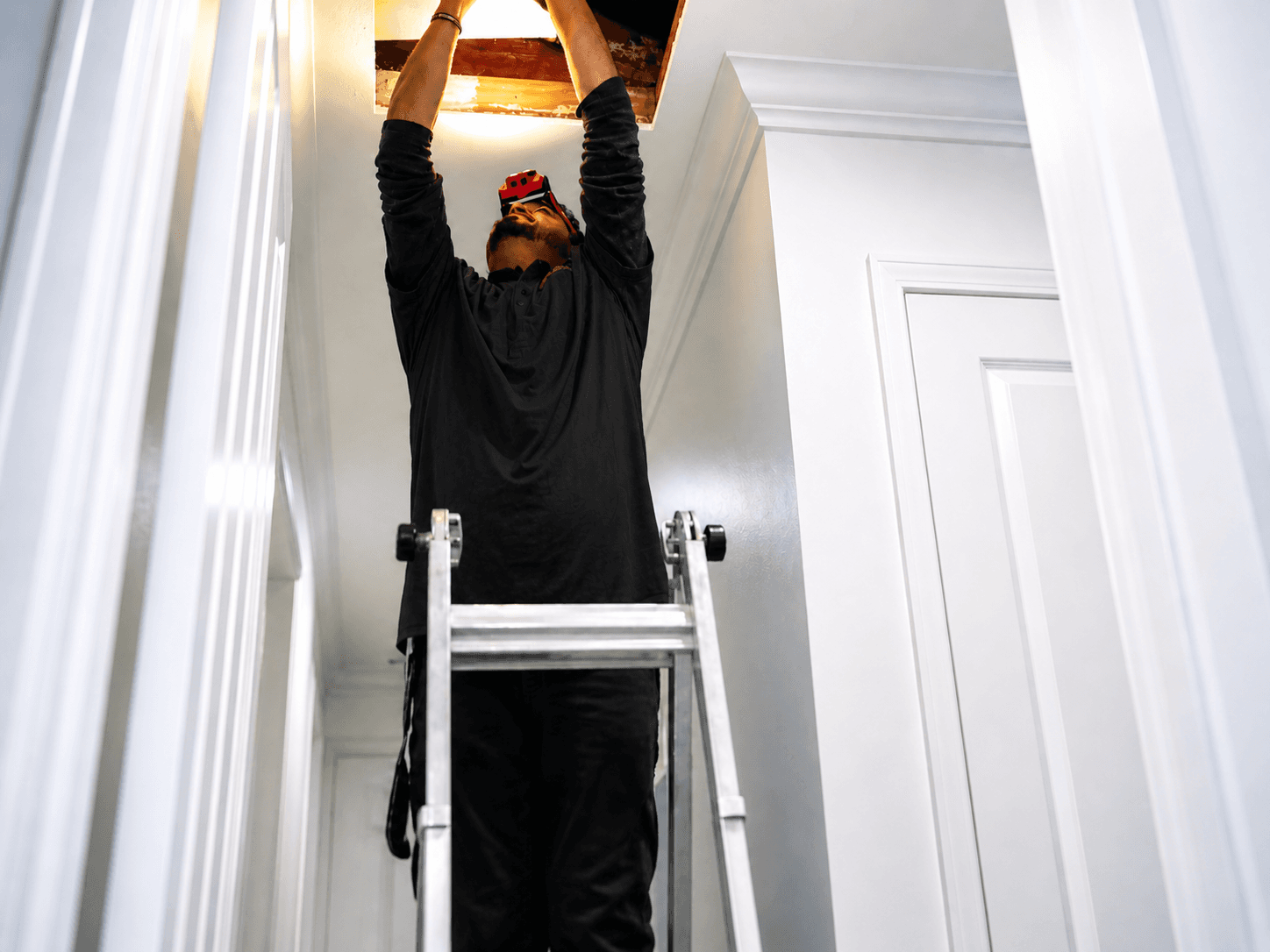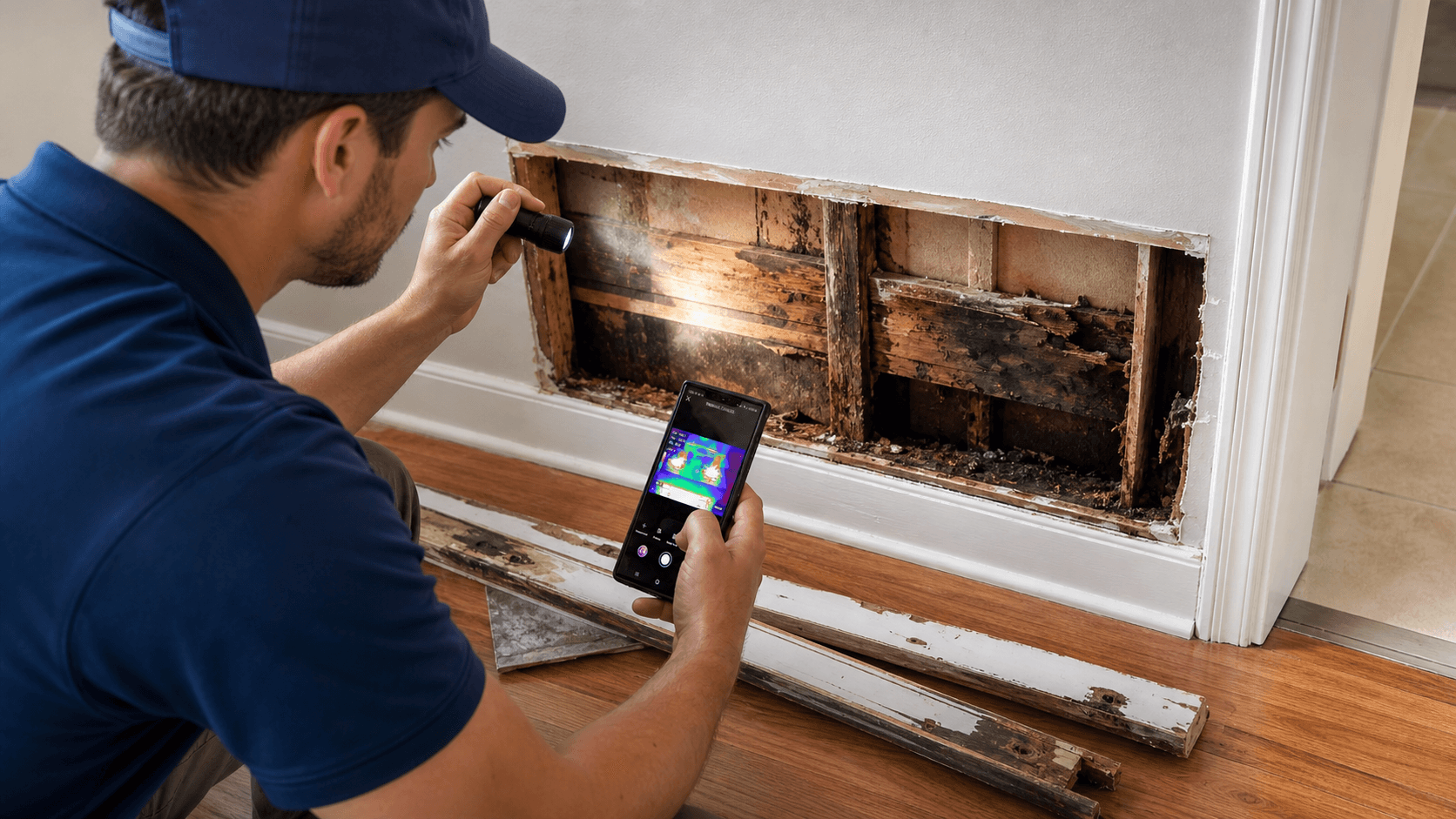
Drywood termites swarm September through November. Here's how to recognize active infestation, when to call for an inspection, and how Section 1 reports affect your escrow.
- ▸Drywood termite season is September–November in OC
- ▸Coastal properties almost always show historical activity in older framing
- ▸Section 1 vs. Section 2 findings determine escrow clearance requirements
- ▸Trident Pest Control operates under California SPCB License #PR8662
Every fall, drywood termite swarms across Orange County trigger a wave of phone calls from homeowners who notice the small piles of wings on their windowsills or the pin-prick frass dropping from a ceiling. Here's what's actually happening, when to act, and how termite findings work in a real-estate transaction.
Why September through November
Drywood termites (Incisitermes minor — California's dominant drywood species) swarm in late summer and early fall when humidity rises and night temperatures drop into the low 60s. A mature colony releases reproductive alates that fly short distances, drop their wings, mate, and start new colonies. If you're seeing wings on windowsills in September or October, it's almost certainly drywood swarmers from a colony either inside your home or in an immediately neighboring structure.
Three signs you have an active colony
1. Frass
Drywood termite frass is the most reliable indicator. It looks like very fine, hexagonal-shaped grains of sand or coffee grounds, usually piling up on a floor below a wood beam, ceiling, or window frame. If you sweep it up and it returns, you have an active colony directly above.
2. Wings on windowsills
Discarded wings appear in fall swarm season. They're translucent, slightly longer than the termite's body, and accumulate at windows because the alates fly toward light. A pile of wings is a swarm event — it doesn't tell you which colony they came from, but it tells you a colony is nearby.
3. Hollow-sounding wood
Drywood termites eat wood from the inside out, leaving a thin outer shell. Tapping a wooden beam, baseboard, or eave that sounds hollow when adjacent wood sounds solid is a strong indication of internal galleries.
Where they hide in OC homes
- Attic framing — particularly rafter ends near the eave
- Exterior eaves and fascia boards exposed to humidity
- Window and door frames on the home's south and west exposures
- Wood floors in older homes
- Detached garages and outbuildings
- Wood patio covers and trellises
Subterranean termites — a different problem
Subterranean termites (Reticulitermes hesperus) are far more destructive per dollar of damage but easier to spot. They build mud tubes from the soil up the foundation to reach wood, and they swarm earlier in the year (typically spring). If you see mud tubes on the foundation, exterior wall, or in the crawl space — that's subterranean activity, and it needs immediate treatment.
Section 1 vs. Section 2 in real-estate transactions
California termite reports are organized into Section 1 and Section 2 findings, defined by Structural Pest Control Board rules.
Section 1 findings document active infestations and existing damage from wood-destroying organisms — termites, beetles, dry rot. These are the items that lenders care about and that escrow companies typically require cleared before close.
Section 2 findings document conducive conditions — things like moisture intrusion, earth-wood contact, or improper grading that could lead to future damage but haven't caused it yet. Section 2 items are often informational; lenders rarely require clearance.
Most California lenders require a Section 1-clear termite report before funding. Some sellers negotiate to provide the report as part of the deal; in others, the buyer pays. Either way, plan on it.
Coastal OC is different
Drywood termite activity within roughly 10 miles of the coast — Newport Beach, Huntington Beach, Costa Mesa, Long Beach, Belmont Shore — is essentially universal in pre-1980 framing. A clean Section 1 on an older coastal home is rare. Lenders and escrow companies in these markets understand this; the question is usually scope of treatment, not whether treatment is needed.
Treatment options
For drywood termites in an isolated area: spot treatment with localized borate, Termidor, or heat. For widespread drywood activity across multiple structures: tent fumigation with Vikane (sulfuryl fluoride) — typically 1–3 days off the property.
For subterranean termites: perimeter trenching with Termidor SC, or in-ground monitoring/bait stations. Treatment usually clears the active colony within 30–90 days.
Working with Trident on termite scope
Our team performs licensed termite inspections under California Structural Pest Control Board License #PR8662. We issue Section 1 / Section 2 reports accepted by lenders and escrow companies throughout Southern California, and we coordinate clearance documentation when treatment is verified complete.
See our termite inspection page for scope and pricing, or our pest control page for treatment options. For specific cities, our pages on Newport Beach, Huntington Beach, and Long Beach cover the coastal patterns we see most often.